
Many types of insects such as bees, butterflies, beetles, and moths, as well as birds, bats and other small mammals, share a critical responsibility in our ecosystems. As they travel between the flowers that sustain them- each individual will transport countless grains of pollen that will become the seeds of the next generation of plants. Providing them with high-quality habitat in our city is essential to a robust ecosystem that can withstand a rapidly changing climate.
Planting for Pollinators
There are many yard care practices that you can follow to help increase pollinator habitat at your home, work, or place of worship. Below are a few recommendations on yard care practices to help you get started with protecting pollinators:
Can you think of a patch of land that could use a refresh? Our yards, school grounds, places of employment or houses of worship can all be opportunities for native plants.
Most lawn-grass varieties (i.e. Kentucky Bluegrass) are not native to Michigan and will not provide the same ecological benefits as native plants. By enhancing unused areas of turfgrass with native grasses, flowers, and shrubs, we can provide purpose to more of our land.
Here are a few things to consider when selecting a site to plant for pollinators:
- How is this space currently being used? Wide open lawns can be community spaces for picnics, sports, recreation activities, or pets.
- How much area in that space can be spared for native pollinator habitat?
- What does the space look like throughout the year? Knowing how much sunlight, water, and which type of soil is present at your site will determine which varieties of native plants will thrive.
- It’s ok to start small and find a little corner that is not being used. In the next couple of years you can continue to add more plants as you learn the seasonal conditions of the location.
Prioritize Native Plants
- Native plants are adapted to our local environment, the seasons and climate, so they will become easier to care for once established in a landscape. By adding more native plants to your garden beds, you will support native pollinating insects have evolved to thrive alongside native plant species.
Phase out Lawn Grass
- Species like Kentucky Bluegrass do not provide enough food or habitat for our pollinators. As West Michigan continues to develop its urban areas- it is critical to ensure our insects, birds, and bats have native plants available for food and essential habitat.
- As an alternative to reducing the area of mowed turfgrass in your yard, try adding a clover mix to your turfgrass areas - this will add diversity that benefits pollinators and will add nutrients to your soil, helping to make your turfgrass healthier without chemical inputs!
Choose Variety
- Don’t limit yourself to just flowers! Choose a mix of native forbs (milkweed, coneflowers, irises, etc.), grasses, shrubs and trees that bloom throughout the seasons, ensuring a continuous food source for pollinators. Grass seed and forbs are critical sources of food for birds and insects during the colder seasons.
Leave Natural Spaces Undisturbed
-
Our local critters could still be sleeping off the cold fall and winter until May! Delay spring clean-up until temperatures are consistently at 50F overnight. Pollinator habitat such as leaf stems, grass clippings, and last year’s plant debris could still have bugs sleeping from autumn.
-
Leave whole or mulched leaves in your yard during the fall and winter. These leaves provide invaluable habitat for pollinator species, especially for overwintering eggs and adults. However, it is important to keep streets and sidewalks clear of leaves and plant debris. When blocking a sidewalk or storm drain, these leaves can be a mobility hazard and cause localized flooding.
Use Sustainable Pest Management
-
Chemical pesticides are poisonous substances that can often have unintended consequences for plants beyond the target. Many pesticides can also pose a health risk to pets and children who interact with a landscape after an application. Misuse, and over-application can pollute creeks, ponds, rivers and groundwater resources when excess pesticide washes into these bodies of water after a rain.
-
Alternative methods for removing weeds are pulling or hoeing; and covering planting areas with 2"-3" of mulch to prevent weeds from sprouting.
Signage and Intentionality
-
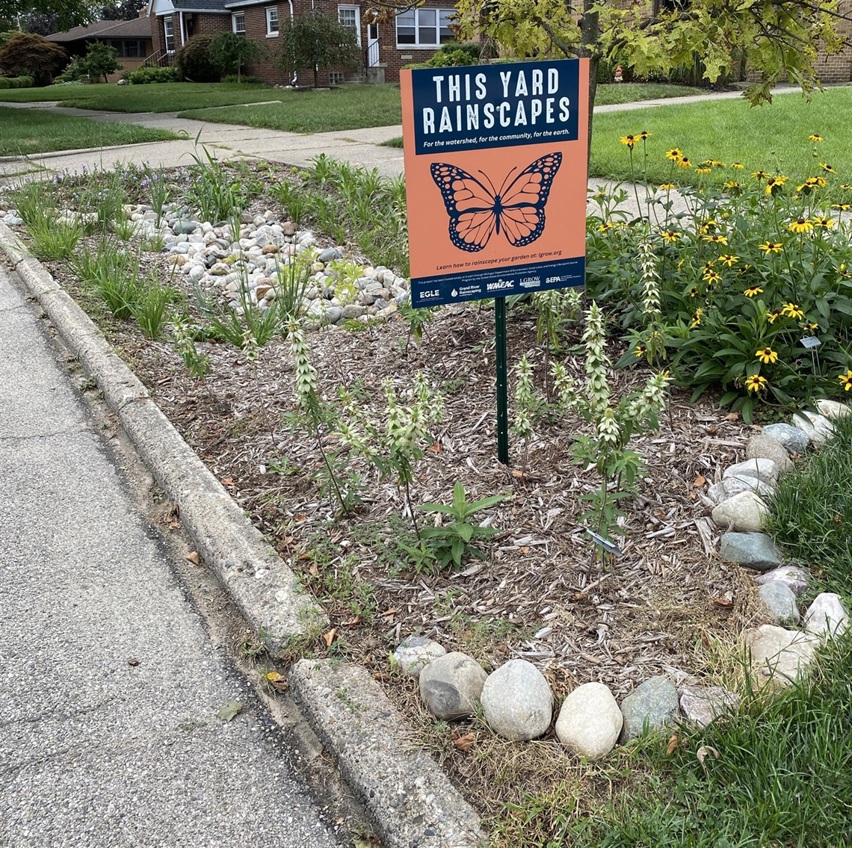
Use signage to help communicate the yard care practices you use and their associated benefits with neighbors and others who may be curious about your pollinator-friendly yard.
-
Consider keeping trimmed borders near sidewalks to keep the walkway clear and send a visual cue that any tall vegetation in your yard is intentional.
West Michigan native plant partners
There are many organization in the Grand Rapids area already doing amazing work with planting pollinators, installing rain gardens, and preserving our local ecosystems. Below are some local organizations where you can get involved;
Blandford Nature Center- the mission of Blandford is to engage and empower our community through enriching experiences in nature. Our vision is a thriving, diverse community that supports a healthy, natural world.
John Ball Zoo- engages in restoring and protecting habitats through education, awareness, and direct action.
Kent Conservation District- protects and enhances the natural resources of Kent County.
Lower Grand Rapids Organization of Watersheds (LGROW)- protects and improves the natural resources of the Lower Grand River Watershed for all to enjoy.
Plaster Creek Stewards- seeks to reconcile relationships between people and the natural world by restoring health and beauty to the Plaster Creek Watershed.
Sierra Club Grand Rapids, Growing Green- encourages natural lawns and native gardens for our neighborhoods.
Wild Ones River City-promotes native landscapes through education, advocacy and collaborative action.
City Staff Contact
Robert Cloy II
Environmental & Climate Justice Specialist
rcloy@grcity.us
616.456.3675
City Yard Waste Drop Off Site
Address 2001 Butterworth SW, GR, MI 49534
Cost FREE to GR residents
Regular Hours (April to Mid-Dec.) Mon-Sat 7:30am - 4:30pm
Winter Hours (Mid-Dec. to May) Mon-Friday 7:30am - 4:30pm


