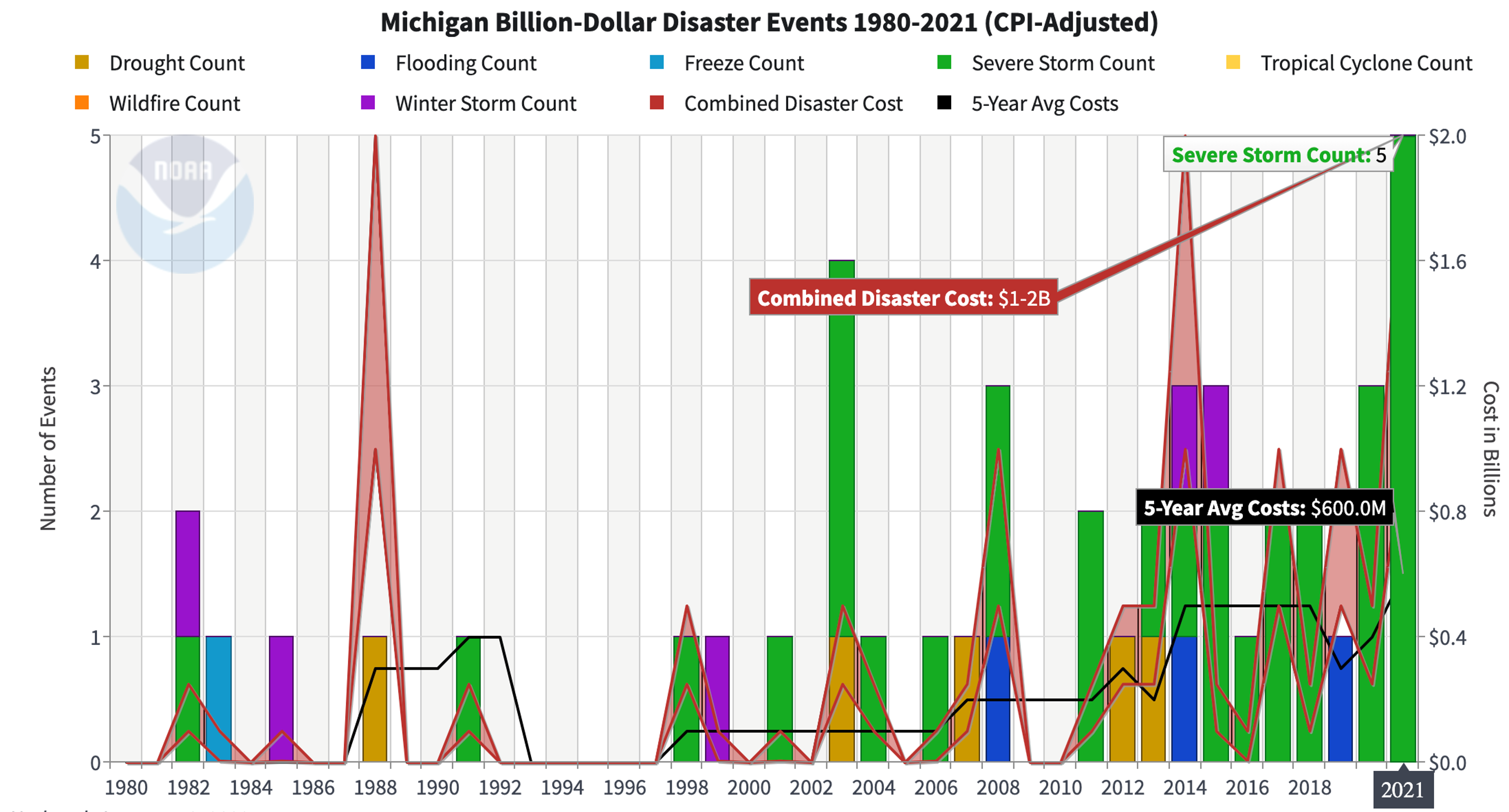
Climate change is also known as a threat multiplier or an accelerant of instability, which means that it has the potential to exacerbate other social forces such as water, food, and energy insecurity, as well as racial and low-income disparities.
Those most impacted by climate change are those who contributed least to the issue due to increased exposure to climate hazards, higher sensitivity, and a lower adaptive capacity. This includes women and low-income populations globally, Indigenous peoples, and Black and Brown neighborhoods in the U.S. that may reside in flood zones, without green space, and potentially near toxic industry sites due to the racist practice of redlining.
Due to redlining, not all Grand Rapids neighborhoods will experience the impacts of climate change equally. Communities that were redlined remain those with a larger percentage of people of color and low-income residents. They are also the same neighborhoods that have fewer trees and green spaces, making them more vulnerable to heat and flooding.
In 2021, the EPA released a report that showed that in the U.S. the most severe harms from climate change fall disproportionately upon underserved communities who are least able to prepare for, and recover from, heat waves, poor air quality, flooding, and other impacts. EPA’s analysis indicated that communities of color are particularly vulnerable to the greatest impacts of climate change.
For local knowledge on how environmental action intersects with race read LINC UP's Neighborhood Environmental Action Report: Health, Environment and Race in Grand Rapids.