Climate change describes long-term shifts in temperatures and weather patterns. Earth's climate has changed many times across billions of years and will continue to change. Many of these changes are caused by natural processes and cycles that increase energy output from the Sun or volcanic activity on Earth.
However, since the 1800s, human activities have been the main force behind changings Earth's climate. Each year, more carbon dioxide (CO2) is released into the air, primarily by burning fossil fuels like coal, oil and gas, than all of Earth's oceans, forests, and soil can remove. This is causing more CO2 to build up and is changing the Earth's temperature.
To learn more, you can watch the first video in our Climate Change Training Series:
Climate vs. Weather
Weather is short-term changes in the atmosphere – which can be that it’s currently raining out, or that we haven’t gotten much snow yet this winter. We use weather to describe short amounts of time like a week, a season, or a year.
Climate is a long-term average of weather over at least 20 to 30 years. So, while one year may have been really cold, when you look at the average change over 20-30 years, our winters are getting warmer with more rain.
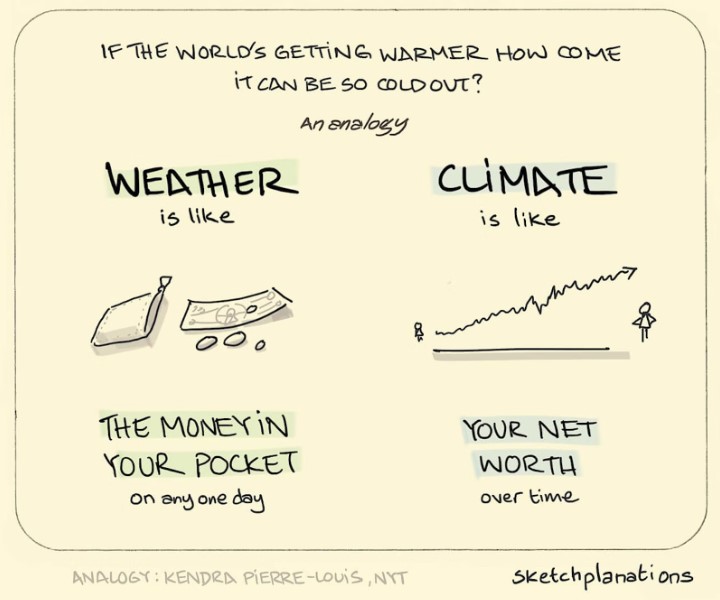
One way to think about this is weather can be like the money in your pocket on any one day, but climate is your overall wealth over your lifetime. Some years may have had a tighter budget than others, but your net worth shows all the ups and downs and identifies trends over time.
The Earth is Getting Warmer
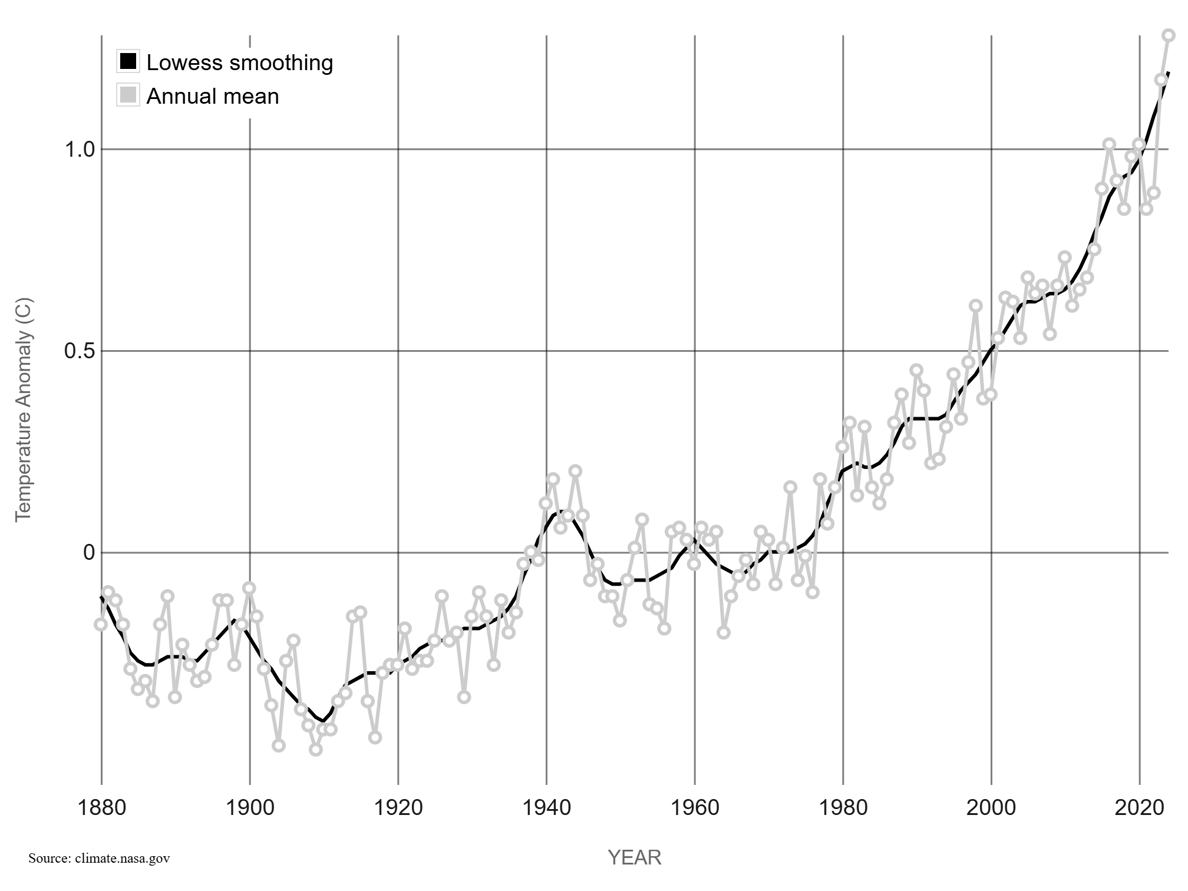
GLOBAL LAND-OCEAN TEMPERATURE INDEX
Data source: NASA's Goddard Institute for Space Studies
In the graph above, each small white dot represents that year's change in global surface temperature compared to the average temperature between 1951 to 1980 (30 years). These dots represent the average temperature that year (weather).
The solid black line is the trend of weather patterns (climate) and shows an increase in the global surface temperature in the past ~150 years. Since record-keeping began in 1880, the hottest year on record remains 2024.
Some years are hotter and some are colder, but when looking across the whole timeline we can see that overall, the Earth is getting warmer. For up to date tracking on global temperatures, see NASA's Global Climate Change Global Temperature page.
The Greenhouse Effect
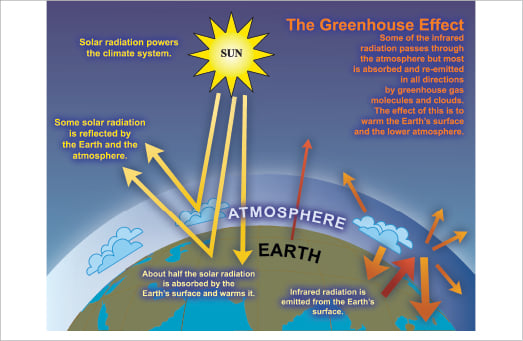
The greenhouse effect describes how our atmosphere can trap heat, therefore warming the surface of the Earth, similar to a clear, outdoor, greenhouse for plants. The types of gas in our air that trap the most heat are called greenhouse gasses, or GHG for short. This natural "blanket" of heat trapping gases prevents the Earth from freezing solid and allows for life to exist.
However, since the 1800s, human activities have been the main force behind changings Earth's climate. More and more CO2, a very strong GHG, has been released and is increasing the thickness of the "blanket."
The Sun’s energy (through solar radiation) shines down and heats the earth. Some of that heat energy bounces off or is reflected by clouds in the atmosphere, the rest warms up the earth and gives off heat energy. The natural blanket traps about half of that energy keeping the earth a temperature we can live in. Once the Earth’s surface is warm, it gives off excess energy to space as invisible infrared radiation.
Greenhouse Gases
The main greenhouse (heat-trapping) gases caused by human activity are:
- Carbon dioxide (CO2)
- Methane (CH4)
- Nitrous oxide (N2O)
- Fluorinated Gases (hydrofluorocarbons, perfluorocarbons, sulfur hexafluoride and nitrogen trifluoride)
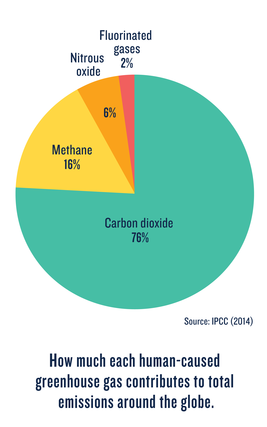
Carbon dioxide (CO2) is often the greatest focus of greenhouse gases because it is has contributed more than any other greenhouse gas and it stays in our atmosphere the longest. Although methane (CH4) may be 25 times more potent it is mostly removed from the atmosphere in 12 years, whereas carbon dioxide sticks around longer, anywhere from 300 to 1,000 years. That is why you see solutions focusing on carbon dioxide, and the term greenhouse gases and carbon used interchangeably.
Human Caused Emissions
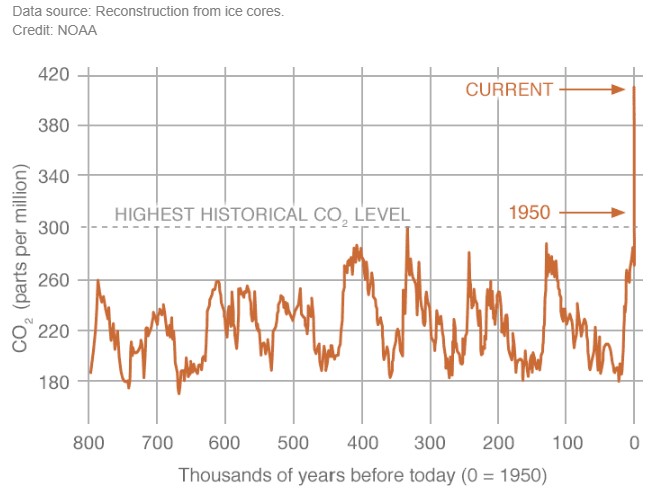
In the past, the climate has changed from natural causes: changes in energy from the sun, massive, sustained volcanic eruptions, and predictable cycles in the Earth’s orbit that drive the ice ages and the warm periods in between have all caused the Earth to be warmer and cooler in the past.
However, since the beginning of the Industrial Era (1850), human activities, such as the burning of fossil fuels, have raised atmospheric concentrations of carbon dioxide by nearly 49%. The increase in global carbon dioxide levels from 1950 to 2022 (current) is more than what had happened naturally over a 20,000 year period. For up to date tracking on carbon dioxide levels, see NASA's Global Climate Change Carbon Dioxide page.
Source of Emissions
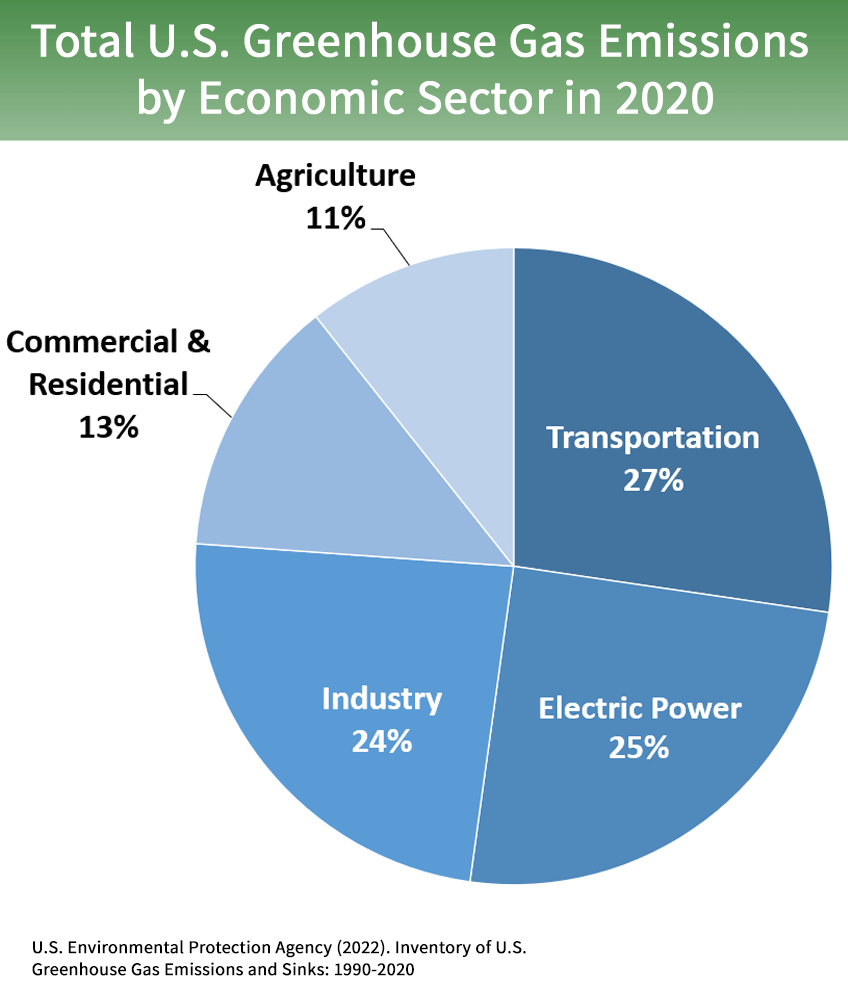
Looking at both the total greenhouse gas emissions by economic sector for the United States and Michigan there is a consistent trend that our emissions are coming from the fueling of our electricity, transportation, buildings, and industry.
Mitigation vs. Adaptation
In climate change work there are two types of solutions: Climate Mitigation and Climate Adaptation.
Mitigation is reducing or preventing greenhouse gases by decreasing how much energy is consumed (or energy efficiency), ensuring energy is produced from renewable sources (such as wind, solar, etc.), and finding ways to capture and store greenhouse gases (known as sequestration).
Adaptation is taking actions that reduce or prevent the harm caused by climate change and can include planning for impacts that are predicted to occur, putting processes in place to respond when anticipated changes occur, and being creative with new solutions (like businesses or energy systems) to adapt to our new normal.
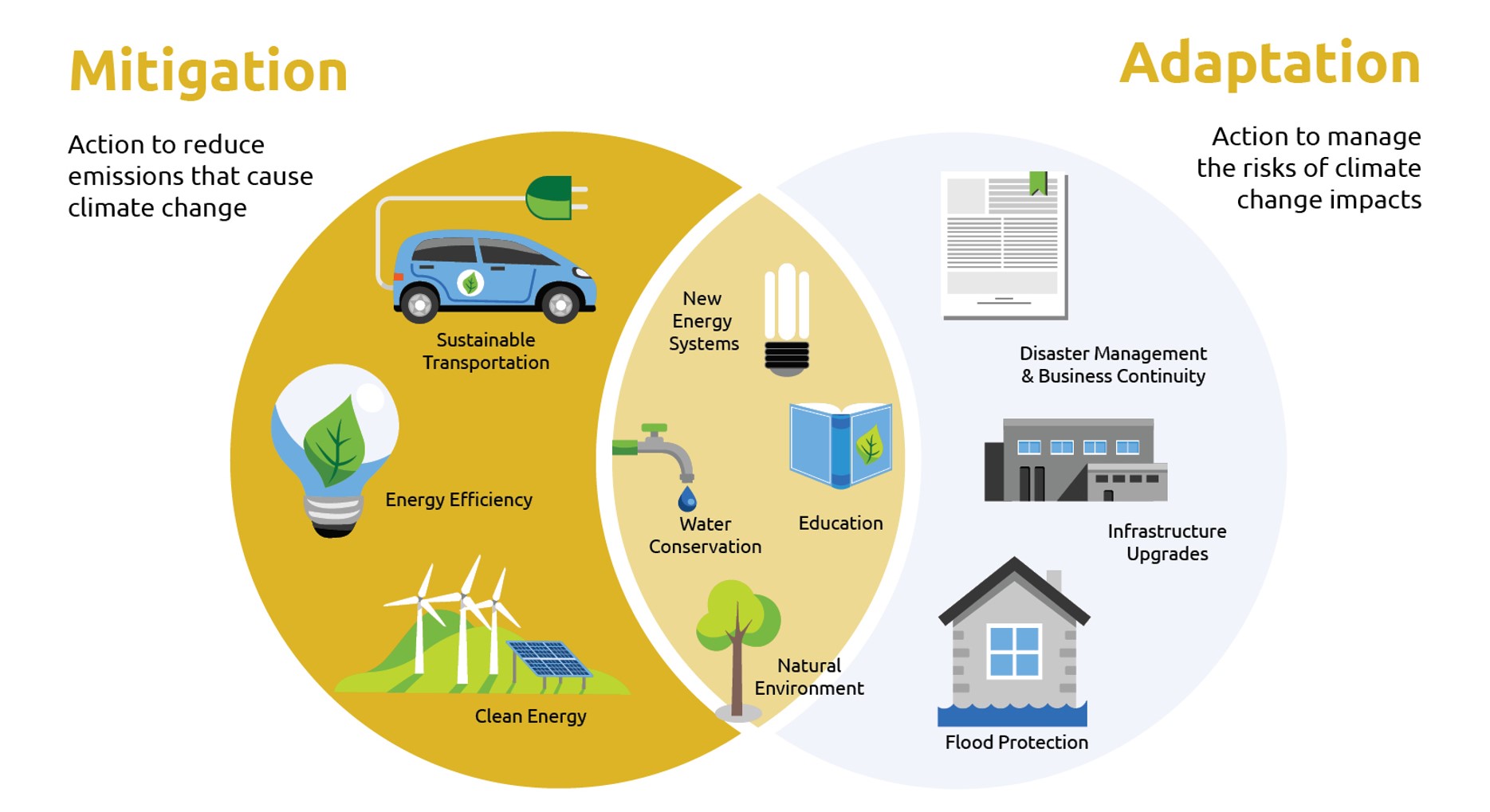
While mitigation is essential to addressing climate change, adaptation is also a high priority when looking to not only maintain but enhance quality of life. For even if all human emissions of heat-trapping gases were to stop today, Earth’s temperature would continue to rise for a few decades as ocean currents bring excess heat stored in the deep ocean back to the surface. But the vast majority of future impacts can be avoided by choosing our future.